Alien V Terminator

Lorem ipsum

Published the 11Th FEB 2026

TV & FILM

Man V Suit


Bringing the monsters to life in Alien and Terminator

Alien and The Terminator share quite a lot in common.  Aside from being classic of the sci-fi genre, both came quite early in the careers of their respective directors; both were produced on relatively small budgets; both were embodiments of the adage that necessity is the mother of invention; both went on to spawn massive franchises of varying quality and success that continue on decades after the original was released (1979 in the case of Alien, 1984 for The Terminator); and both would punch well above their weight in terms of influence and cultural significance. You could, if you were so inclined, also argue that neither film was bettered by their successors.  


Both films similarly faced problems with their main protagonist. In the case of Alien, director Ridley Scott desperately wanted to avoid the eponymous alien looking like a man in a rubber suit. James Cameron was dealing with the flip side of the same coin. He had to find a way to stick a robot in a man suit. 

Alien: The man in the suit


The design ethic on Alien had taken the rough ’n’ ready approach of Star Wars and ran with it. The movie’s spaceship, the Nostromo, had been developed around director Ridley Scott’s vision of a B-52 in space – he’d even shown the designers Stanley Kubrick’s Dr Strangelove to enforce this ethos. The vessel’s exteriors and interiors had made the transition from the drawing boards and sketch pads of such legendary artists as Ron Cobb, Chris Foss and Moebius to the full-blown sets at Shepperton Studios and filming was good to go. Scott, however, was lacking the movie’s star: the eponymous Alien. 


The director’s principal concern was that cinema aliens of the past could not disguise the fact that they were clearly men in rubber suits. To overcome the dilemma, he needed a man and a suit the likes of which moviegoers had never seen before. The problem was solved when Alien writer Dan O’Bannon introduced Scott to the work of Swiss artist H.R. Giger. Giger had, from an early age, been fascinated by the strange, the surreal, the bizarre, often driven by his own night terrors. As a young artist, he had discovered the airbrush – the Photoshop of the 1970s – and became an early exponent of the tool. Using the airbrush gave Giger’s artwork a sensual, smooth quality which blended rather too perfectly with his nightmarishly organic psychosexual designs. O’Bannon had recruited Giger to produce artwork to help generate funding for the film but when Scott saw Giger’s work, the director knew he had found the answer to his prayers. 


Giger was a great deal more hands on when it came to his involvement in Alien. He designed and had a hand in building the planet the Nostromo lands on; the weird ship the crew discovers; the fantastic “space jockey” they encounter; and the various stages of the Alien’s life cycle – from the egg to the chest-burster to the xenomorph’s ultimate expression: the full-grown Alien – or Big Alien as it was known. 


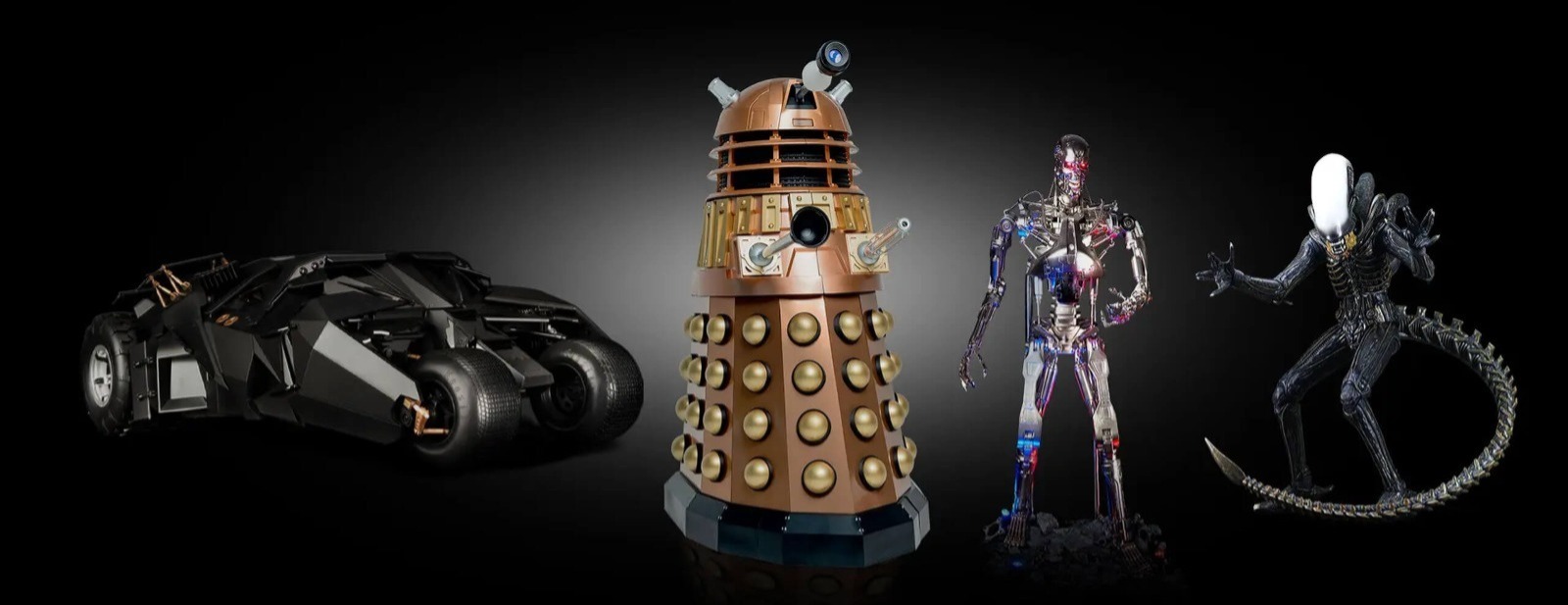
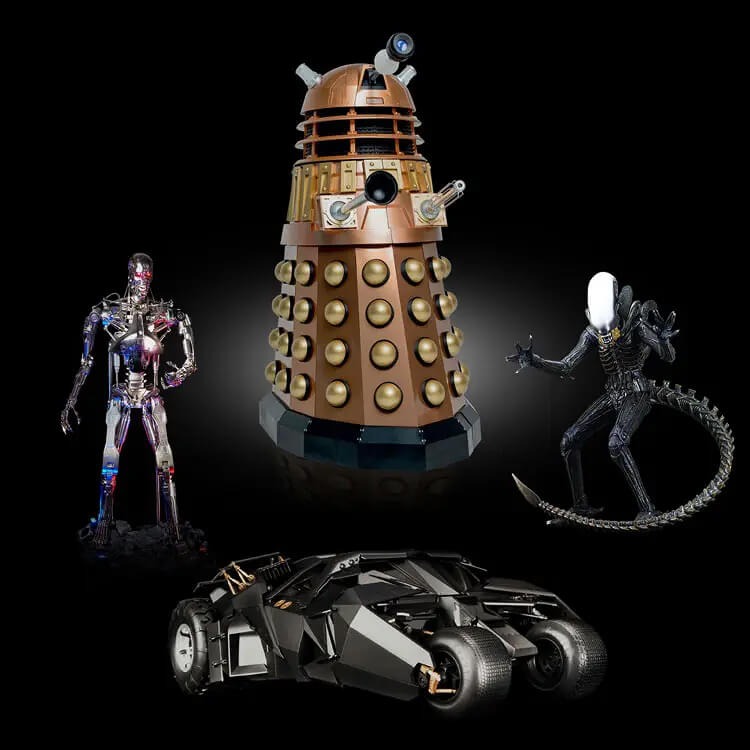
Whilst the adult alien was still essentially a man in a rubber suit, there were various ways that Scott circumvented any perceived problems. First, there was the design of the suit itself. With its various appendages, its extraordinary phallic head, and its biomechanical exoskeleton, with all the bones on the outside, it certainly didn’t look like a run-of-the-mill man in a suit. 


Then there was the man himself. Scott wanted someone who wouldn’t just tramp around like the usual space aliens. He wanted someone to give the Alien an ethereal grace all its own. After a difficult search that included interviewing karate experts and supermodels, the filmmakers were introduced to Bolaji Badejo, a 7.2ft-tall Masai, and the hunt for the Big Alien was over. 


To make the Big Alien suit, Badejo was completely cast in plaster while naked, after which Giger set to work. Using what might be considered a fetishist tool kit, he employed rubber, latex, plastic, wire and bone, amongst others, to formulate the suit. He also used translucent plastic to make the Big Alien’s head, and a complex mechanism to make the jaws-within-jaws. The suit also needed a degree of flexibility as the Big Alien was intended to be able to move with a certain fluidity, aided by Badejo’s inherent balletic grace. 


Scott was still concerned that, despite Giger’s extraordinary efforts, the result on screen would be his greatest fear: the man in a rubber suit. However, using clever photography and lighting, and making the most of Badejo’s stature, Scott produced scenes of beautiful terror – the way the Big Alien descends behind Brett, out of focus, like a giant spider; how the creature glides, arms outstretched, towards the terrified Lambert. Little wonder that Alien has joined that pantheon of films whose influence is such that there before it and then there is after it. Following the movie’s release, ‘Gigeresque’ became a noun for all the movie aliens that sort to but could never emulate such an incredibly unique design.

The Terminator: The robot in a man


By 1984, the art of stop-motion was a dying one. Clash of the Titans, made in 1981, marked the end of the line for one of method’s greatest proponents, Ray Harryhausen. That same year, Dragonslayer was released as joint production by Paramount and Disney. A curiously gritty fantasy, it was a strange film to be associated with the “House of the Mouse”, who was struggling at the time to find a hit. However, the film was also something of a technology demonstrator, employing, as it did, go motion, a method developed by special effect impresario Phil Tippett. It uses the same method of animation as stop motion – the frame-by-frame movement of a maquette or puppet – but each frame uses a motion blur to smooth out the staccato judder of traditional stop motion. 


Another curious Disney movie from the ‘80s was Tron, not so much a film per se but another technology demonstrator with a story built around it. It was the harbinger of the computer-generated revolution to come, but in the early- and mid-eighties, the likes of Tron and The Last Starfighter were seen more as curiosities. When it came to The Terminator, things were still going to have be done the old-fashioned way. 


Considering the available technology and budget, director James Cameron had always envisaged using stop-motion for scenes involving the T-800 endoskeleton. However, he was greatly helped by Stan Winston, a master of animatronics, who persuaded Cameron to use full-size versions of the T-800 for close-ups and certain other scenes. Winston also created the life-size busts of the battle-damaged Arnold Schwarzenegger, complete with cybernetic eye and exposed chrome endoskeleton. 


The use of animatronics ended up shaving months off the schedule given to Fantasy II, the special effects company handed the task of creating the stop-motion T-800. The model-builders at Fantasy II were required to build a 1/3-scale model of Winston’s full-size version. As such, it was two feet high and made with all the necessary moveable joints to animate the model. Many of the hundred or so parts needed to construct the T-800 were so small they had to be hand-crafted from aluminium. These were then built on to the steel framework that formed the core of the maquette, final assembly taking two weeks to complete. 


However, delivery of the final T-800 had been held up by delays at Stan Winston’s studio in making its own deadline. Fantasy II was forced to wait for the full-size animatronic to be completed so the model builders knew what they were copying. To make matters worse for Fantasy II, time was a major factor as various scenes needed to be filmed before principal photography on the film began because Cameron was going to use rear projection for certain scenes. This is a filmmaking method dating back to the early years of cinema; in the case of The Terminator, the stop-motion scenes were completed then projected at full size relative to the actors for the cast the act against. The results can be seen in the climactic scenes of the film, such as when the T-800, stripped of its human suit, rises from the flames. 


To help audiences to believe that man, animatronic and stop-motion puppet were one and the same, Cameron gave the T-800 a limp – the result of the truck crash that incinerates Arnie’s human suit. Whilst adding credibility to the various versions of the T-800, it did add another layer of difficulty for the stop-motion animators already having to handle working at 24 frames per second, the frame rate The Terminator was filmed at. 


Fantasy II also chose not to use go motion in the way that the makers of Dragonslayer had. Rather than add blur to each individual frame of film, the animators had a rather simpler and more elegant solution: for scenes where the T-800 was moving at speed, to give motion blur, they fitted a pane of glass lightly covered in Vaseline between the puppet and the camera. 


Forty years on, the results of Fantasy II’s work on The Terminator might be considered quaint, even shonky, by a generation raised on such SFX monsters as Jurassic Park and James Cameron’s own Avatar. Yet, the work of the teams of filmmakers need to be put in context. CGI has made it possible to create effects unimaginable in the 1980s, yet the likes of Fantasy II used incredible ingenuity and hundreds of man hours to help give life to movies that decades on are considered some of the greatest films of all time.